filler97 Red Hook Green

Photography courtesy of Garrison Architects.

Photography courtesy of Garrison Architects. (Click images to enlarge)

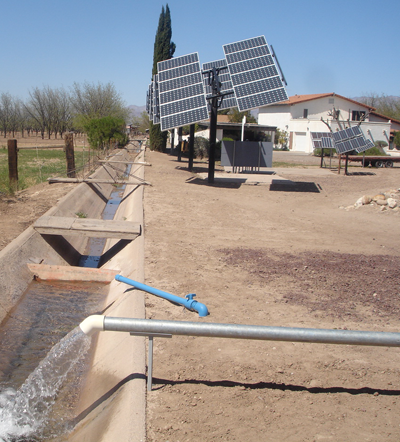
filler97 Red Hook Greenredhookgreen title Red Hook GreenWhile “sustainability” is possibly the hottest buzzword in the world of contemporary design, the term “net zero-energy” is comparatively unknown. Red Hook Green, the newest project by the Brooklyn-based Garrison Architects, is likely to change that. The project is poised to be New York’s first net zero-energy live/work building — it will sustain itself through natural means, and contribute no pollution to our beleagured city air.
     The US Department of Energy defines a zero-energy building, or ZEB, as “a residential or commercial building with greatly reduced energy needs through efficiency gains such that the balance of energy needs can be supplied with renewable technologies”. What’s most revolutionary about the concept of a ZEB is that it asserts that city structures can meet all their energy needs from such low-cost, locally available, and renewable resources as solar and wind power.
     Red Hook Green is approximately 4,000 square feet and includes space for a studio/workshop, corporate offices, garages and a residential apartment — as well as an outdoor green space. Inspired by shipping containers (whose creative potential we covered earlier), the building’s form pays homage to the its Red Hook location, which has long been defined by its active shipping port. Composed of stacked, modular units, the design also takes advantage of the area’s incomparable harbor views. Here’s hoping that this initial effort allows the most greenest of design concepts to take root in the most urban of settings.
     Red Hook Green is to be completed by December 2010. Until that time, those interested can follow its progress through its blog.

1 2 3


Photography by Dan Farrar. Additional photography by Groves-Raines Architects. (Click images to enlarge)

Photography by Dan Farrar. Additional photography by Groves-Raines Architects. (Click images to enlarge)

compost title Composting Shed at Inverleith TerraceOne mile north of Edinburgh’s city center, a composting shed has garnered a great deal of international attention. Boasting two Scottish Design Awards and an Excellence in Design Award from the American Institute of Architects, the seven-month construction project was conceived and executed by Scotland’s Groves-Raines Architects. Made from Corten steel and rebar — the steel used in reinforced concrete — the shed has the potential to strike a jarring contrast with the surrounding greenery. Yet the industrial materials are manipulated with traditional techniques, creating a structure that emerges strikingly naturally from its surroundings.
     Because the rods that make up the shed are inserted directly into the ground, the garden remains unaffected by any invasive building foundations. To create the dual-purpose composting shed and garden store, the architects relied on “a technique similar to traditional willow weaving” to make the steely walls more conducive to its earthy setting. Bent into smooth curves, the rods lose much of the harsh quality often associated with industrial building materials and begin to blend seamlessly with the adjacent wooded area. The woven rods allow air and light to stream into the shed, a benefit both practical and aesthetic. Lastly, the roof is made with weather-resistant EPDM lined steel and planted with grass, reinforcing “the connection with the wooded context” that the architects rightfully claim. By re-purposing the typical building blocks of urban architecture to create an “organic form” structure, Groves-Raines Architects successfully reimagines our uses for man-made materials.

1 2 3 4 5 6 7

 
BLOGS
Art Observed
Artco
Eclectic Cow
Fashionista
Kempt
Magculture
 
PUBLICATIONS
Another Magazine
Good Magazine
Lost at E Minor
Refinery 29
Rhizome
S Magazine
Superfuture
MISCELLANEOUS
Charity: Water
Radio Nova
Tiny Vices


Features, Greenspace June 16, 2010 By Editors

filler93 Gulf Coast Oil Spill

Photography courtesy of Sueddeutsche Zeitung.

Photography via Sueddeutsche Zeitung.

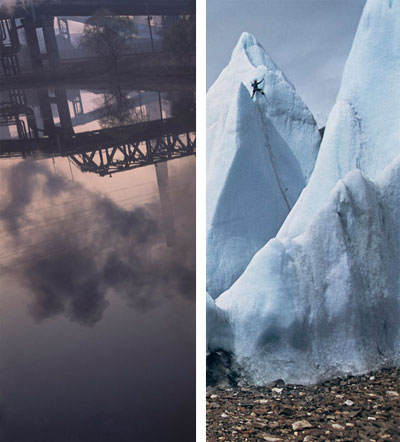
filler93 Gulf Coast Oil Spilloilspill title Gulf Coast Oil SpillWatching the oil spill unfold in the Gulf has been devastating to witness.  And “devastating” is even an understatement — from the ubiquitous photographs of oiled pelicans to the recent news that the amount of oil flooding the gulf is actually far more than we were told, meaning that the equivalent of the Exxon Valdez disaster has been spewing into the ocean every 4 to 6 days — there are simply no words capable of expressing the dismay and anger that we all feel as witnesses to this horrific level of environmental destruction. Bill McKibben, who we interviewed recently about his new book, has eloquently written about the wider ramifications we’ve missed in our coverage of the spill. We urge you to take a look.
While many of us live far from the coasts of Louisiana and Florida, where the oil is literally lapping at the shores, we can each offer what we are able in the form of monetary donations. For those readers in the area, or with access to it, there are also many organizations looking for volunteers. For all of us who feel the urge to do something — anything — to help, what follows is a list of non-profit organizations that we recommend donating to, or volunteering for:
     The National Wildlife Federation is accepting donations to help them save the more than 400 species of animals threatened by the spill, as well as looking for volunteers to observe the coast for signs of oil and injured wildlife. The Audobon Nature Institute is accepting donations to fund their triage units which treat marine animals such as otters and sea turtles. The Mobile Baykeeper is an Alabama-based organization currently devoting their efforts to the gravely threatened coast.

1 2 3 4 5 6

Design, Greenspace June 15, 2010 By Jeanette Wyche

Images courtesy of branchhome.com (Click to Enlarge)

Images courtesy of branchhome.com (Click to Enlarge)

wasara title WasaraSophistication and sustainability are not words commonly associated with disposable dishware. But the Japan-based company Wasara has developed a product that takes the mind far away from the uninspired aesthetics of family barbecues and children’s birthday parties — not to mention, the nagging guilt over environmental waste — conjured up by your everyday paper plate.
     Wasara’s collection achieves the critical goals of modern design with a product that offers style, function, and sustainability. The sleek, all-white pieces transform into veritable works of art when stacked on top of each other. The collection includes a variety of plates, bowls, cups, and mugs. The multiple forms accentuate each individual food item, emphasizing the significance of each part of a meal. The unusual curvature and soft, natural texture allow for the plates to rest comfortably in one’s hand, bringing an ease to socializing while enjoying a meal.
     The collection’s noteworthiness, however, does not solely stem from its outward appearance. The dishware is made from reed pulp, bamboo, and bagasse — a byproduct of the sugarcane industry. Reed and bamboo are both quickly-regenerating natural resources; the manufacture of Wasara tableware thus avoids the ecological impact of traditional, wood-based paper manufacturing. Bagasse, which often is discarded, is recycled. The resulting tableware is completely biodegradeable. Once discarded, Wasara simply returns to nature.

1 2 3 4 5 6 7


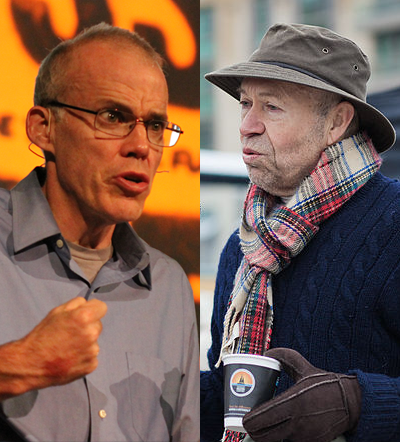
mckibben page2  Bill McKibbenmckibben title  Bill McKibbenThink of everything you know about global warming. Think, especially, of the sense you might have that there are twenty, thirty, fifty years left before the Earth’s levels of climate change become truly catastrophic. Now, think again. We’re already there, says Bill McKibben in Eaarth (Times Books, $24.00), an eloquent and passionate call to action. In fact, says McKibben, we’ve changed our planet so much that we can no longer think of it as Earth: now it’s Eaarth, a place of melting ice caps, expanding tropics, and increasingly dramatic “weather events”. And we have to learn to live there.
     McKibben should know what he’s talking about. A leading journalist and environmental activist, he’s been writing on this subject for more than twenty years. In 1989, his The End of Nature was the first book on global warming for a general audience. In the past two years, his nonprofit 350.org has mobilized millions of people across the world to combat climate change.
     In Eaarth, he makes no bones about how serious the situation has become. We’ve already raised the temperature of the planet by one degree Celcius, he writes; as a result, the Arctic ice cap is 1.1 million square miles smaller, and (since warmer air holds more water vapor) global rainfall is increasing by 1.5 percent a decade. But this isn’t just a book full of dry statistics. McKibben is expert at explaining, lucidly and frankly, just what the numbers mean, and what we can do about them. “Forget the grandkids,” he writes. “It turns out this was a problem for our parents.”

1 2 3 4 5

Art, Greenspace June 9, 2010 By Nalina Moses

filler83 CLIMATE CAPSULES

Ilkka Halso, Museum of Nature: Museum I, 2003. All images courtesy of Museum fur Kunst und Gewerbe (Click images to enlarge)

Ilkka Halso, Museum of Nature: Museum I, 2003. All images courtesy of Museum fur Kunst und Gewerbe (Click images to enlarge)

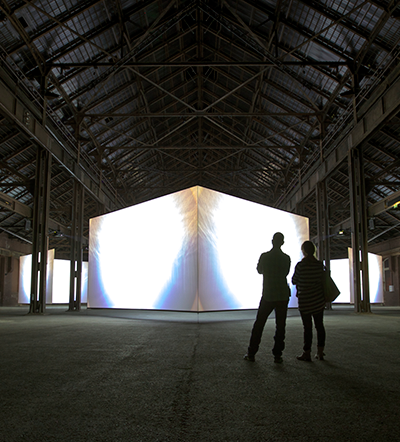
climatecapsules title CLIMATE CAPSULESJust as governments begin to implement policies and practices to slow global climate change, some designers are jumping ship. They fear that our environment is damaged beyond repair and are thinking up ways for us to survive the impending apocalypse. A new show at the Museum fur Kunst und Gewerbe in Hamburg, Climate Capsules: Means of Surviving Disaster, gives credence to their ideas.
     These artists attack the problem at various scales. Some are creating specialized articles of clothing to protect the human body from increasingly damaging atmospheric conditions. Lucy Orta crafted a tent-like, nylon garment that gives protection from the light, heat, cold, and water. Equipped with its own whistle, lantern, and compass, it’s like a highly-evolved all-weather coat. Performance artist Lawrence Mastaf designed a clear vacuum-sealed plastic trap for himself, in which he lies suspended with only slender tubes to breathe through. It’s a spectacle that’s both eery and peaceful. He’s preserved like a biological specimen, and floating dreamily like an embryo.

1 2 3 4 5 6 7 8 9

Art, Book, Greenspace May 26, 2010 By Nalina Moses

filler71 newton creek

Photography courtesy of Princeton Architectural Press

Photography by Anthony Hamboussi. Courtesy of Princeton Architectural Press

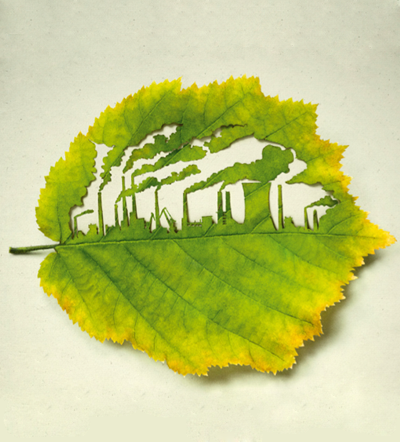
filler71 newton creeknewtowntitle title newton creekAs we grow more and more distressed by the oil spill in the Gulf of Mexico, it’s a good time to remember Newtown Creek, a similarly devastated body of water that runs right through Brooklyn and Queens. Once teeming with plant and animal life, the creek was polluted by decades of industrial dumping, and by the gradual leakage of 17 million gallons of oil from underground storage tanks. More than ninety-five acres of water and land were spoiled. Although a clean-up was undertaken in the 1990’s, the area remains too toxic for conventional development and was recently added to the EPA’s Superfund National Priorities List.
     Brooklyn-based photographer Anthony Hamboussi traveled the length of the creek from 2001 to 2006 to compile Newtown Creek: A Photographic Survey of New York’s Industrial Waterway. His images poignantly capture the remains of what was once a thriving industrial culture. Waterfront plots are built up with factories, warehouses, silos,  smokestacks, and shipping piers, many abandoned and in disrepair. The creek itself is visible only in low, dark stretches, frozen in the winter and fetid in the summer. It looks more like a sewer than a natural body of water. Some factories along the shores remain active, but the only signs of natural life are weeds sprouting up through the paving.

1 2 3 4 5 6 7 8 9


Events, Greenspace May 19, 2010 By Nika Knight

filler68 (Re)Fashioning Fiber

Atefeh Kash and Tarah Goodarzy's crocheted fiber installation in Iran (photography by Sharnaz Zarkesh)

Atefeh Kash and Tarah Goodarzy's crocheted fiber installation in Iran (photography by Sharnaz Zarkesh)

refashioningfiber title (Re)Fashioning FiberFiber, one of the most ancient natural materials, is currently enjoying somewhat of a renaissance. Used for craftwork, utilitarian items, clothing, and contemporary art, fiber today serves as “a resilient and easily sourced material for many of today’s sustainable design solutions”. Re-fashioning, recycling, or reusing natural fiber is gaining in popularity, as a new wave of eco-crafting hints at the ways in which fiber is working to reconnect artists and consumers to one another as well as to our threatened natural world. A synecdoche for a more environmentally-conscious world, environmental and textile artist Abigail Doan’s upcoming Tribeca exhibit examines new ways of considering fiber “in relation to the natural environment, our patterns of consumption, and contemporary definitions of fashioning self”.
     According to Doan, (Re)Fashioning Fiber will include “collaborative environmental fiber art from Iran; handcrafted vegetation jewelry from Bulgaria; sustainable, locally-minded fashion and drawings by Eko-Lab; no-waste textile fashion by Study NY; recycled ‘flotsam fiber’ from the streets of NYC; handmade books spinning tales about a global pilgrimage; crochet tower structures infused with sound”, and much more.

(Re)Fashioning Fiber opens tomorrow, May 20, 6:30-8:30pm at Green Spaces NY, 394 Broadway, 5th Floor. The exhibit will be on view through August 13, 2010.

1 2 3 4

(un)plug, design for an office tower in Paris

(un)plug, design for an office tower in Paris

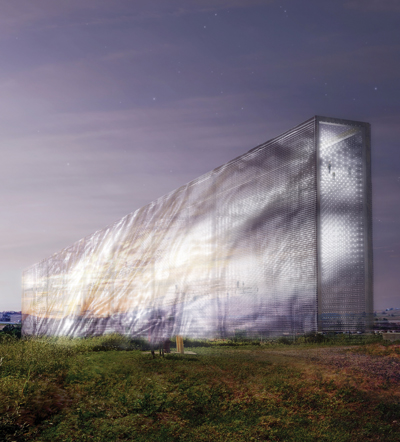
biore title BIOREBOOT

Green thinking is changing the way we build. We’re reusing existing structures and materials, designing more efficient building systems, and thinking about long-term sustainability. But these changes are minor in view of the far deeper changes to come, as ecologically-minded designers reexamine their most fundamental assumptions about a door and a roof and a foundation, and reimagine what a building is entirely.
     The visionary French architecture office R&Sie(n) is right at the forefront. Its projects, collected in the book Bioreboot: The Architecture of R&Sie(n), offer an architecture that’s deeply enmeshed with natural forces, and entirely liberated from modern conventions about design and construction.
     Since the mid-nineteenth century, when steel framing supplanted heavy masonry construction, buildings have been conceived as stable shells that shaped efficient interior environments, as machines for living. R&Sie(n) complicates this paradigm. Its buildings aren’t discrete, unchanging objects but mutable devices embedded within ecologies of weather, time, geology, flora, and fauna.

1 2 3 4 5 6 7

Events, Greenspace May 6, 2010 By Nika Knight

Photography by Brianna Capozzi

Photography by Lily Ferguson

sustainablepracticestitle Sustainable ExchangeSustainable Exchange, a series of weekend workshops, installations and exhibits featuring artists who work within the sustainability movement will take over TODA Design Studio on West Broadway to demonstrate and explore the versatility and possibilities of sustainable consumption in the fields of art and design. Featuring performance artists, textile artists, fashion designers and musicians—plus many more—the gallery exhibition and workshops are offered free and open to the public 12-6pm daily. The range of workshops is wide: beginner finger crochet (no hooks necessary); the art of dyeing cloth with natural sources such as spices, teas, and roots; fashion illustration and collage; a seminar on sustainable business practices; cooking local seasonal fare with reknowned sustainable foods chef Anne Apparu. The three-day event aims to create a veritable labaratory of ideas and practices—mixing together public participation and the ideas and creations of long-standing sustainable artists, the project hopes to collectively nurture the growth of the sustainability movement.

Sustainable Exchange: Methods and Practices for Collaborative Partnerships will be open for public participation on May 7th-9th from 2-6pm at TODA Design Studio, 250 West Broadway, 6th Floor.