

Art July 23, 2012 By Sophie Mollart

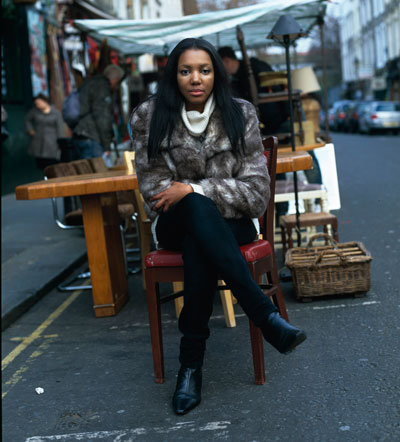
<em>Swaziland</em> Emely Dlamini, Swaziland John McCafferty © John McCafferty

Swaziland Emely Dlamini, Swaziland John McCafferty © John McCafferty

theworldinlondonheader The World in London
As the Olympic games descend on London this month – an event Londoners will likely meet with ambivalence, agitation and hopefully just a little bit of excitement – the Photographer’s Gallery will launch an outdoor exhibit celebrating the city’s rich ethnic composition. London has the kind of polyphony of culture to rival Astoria, Queens; that’s 300 languages spoken and more than 50 non-British communities contributing to it’s ever expanding cultural make-up.

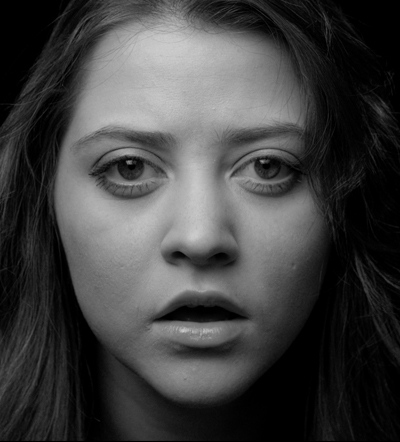
The Photographer’s Gallery has commissioned 204 international photographers to portrait London’s émigré community – residents born in each of the 204 countries competing in the Olympic and Paralympic games that now call London home. Emerging photographers will feature alongside established names such as Toby Glanville, Anders Petersen, Jim Goldberg, Rankin, Stefan Ruiz, Dryden Goodwin, Karen Knorr and Catherine Yass. The entry for British-born resident is a portrait of fashion designer Alexander McQueen, photographed by Andres Serrano a year before his death in February 2010.

The photographs can be viewed in East London’s Victoria Park from 27th July – 10th August.

Slideshow


Art, film June 15, 2012 By Sophie Mollart

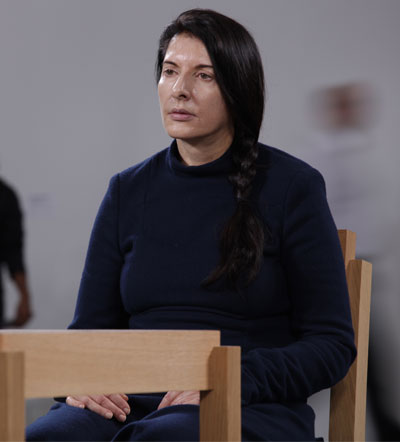
Marina Abramović. Photo Credit: David Smoler

Marina Abramović. Photo Credit: David Smoler

header14 The Artist Is Present
Over the stretch of her thirty-year tenure as performance art’s matriarch, Marina Abramovic has unceasingly pushed the boundaries of the corporeal. In the Spring of 2010, the Museum of Modern Art housed a retrospective of her performances to date, as a troupe of young artists re-enacted highlights of her earlier work. The centerpiece of the show, The Artist is Present, is explored this month in a new documentary. Evolving from a previous performance – Nightsea Crossing – in which she and Ulay, her former lover and collaborator, would sit silently, eye to eye, hour upon hour. This time, Ulay was to be replaced by whoever should wish to partake, as the audience was invited to silently commune with Abramovic for the duration of their choosing.

Filmmaker Matthew Akers originally approached the prospect of filming Abramovic with a healthy skepticism: “I had been to school for sculpture and I’d never witnessed great performance art so I was suspicious. When I met her she was incredibly charming, we hit it off right away, but I told her, if we do this, you can’t have any editorial control, that means if I find out stuff that’s less flattering to you, you’re going to have to let me use that. She said – listen little baby – she calls everyone little baby – you can have total control, I’ll give you the keys to my apartment, don’t worry – and about a week later she gave me the keys to her apartment.”

1 2 3 4 5

film May 9, 2012 By Sophie Mollart

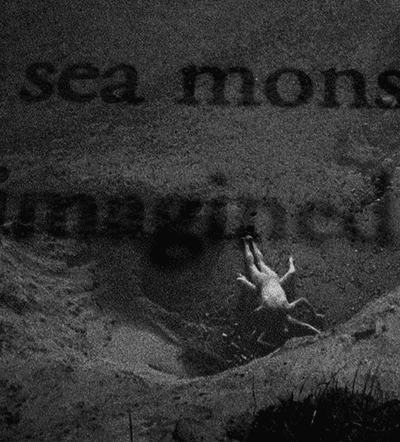
<em>Patience (After Sebald)</em> screening at Film Forum from May 9

Patience (After Sebald) screening at Film Forum from May 9

patienceheader Patience
It has been suggested that the Rings of Saturn – fragments of dust, ice crystals and meteoric debris that rotate the sixth planet from the sun – once formed a moon that wandered into the planet’s gravitational pull, was shattered by its tidal effect, and set consequentially into a perpetual orbit.

German-born writer W.G. Sebald’s most well known work follows a similar course – an accumulation of dispersed fragments, a spiritual homelessness that accompanies his pursuit for the location of the self in space. Transplanted to the east coast of England in 1970 – it was in the Suffolk countryside where Sebald formed his work of meandering, elliptical power.

Documentary filmmaker Grant Gee, best known for his film Joy Division, celebrates Sebald’s journey in his new work Patience (After Sebald). “In Sebald’s book Austerlitz, a character compiles old family photographs, images of places and locations in his past, in the hope of unlocking the secret of his trauma. He does this playing a game of patience – or solitaire, in English. I connected to that idea, using structure and montage in order to unlock something.’’

1 2 3 4

film April 5, 2012 By Sophie Mollart

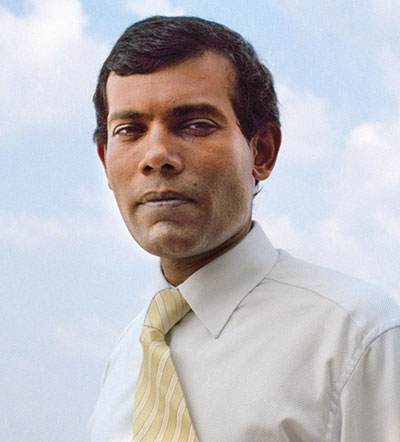
Pres. Mohamed “Anni” Nasheed. Chiara Goia.

Pres. Mohamed “Anni” Nasheed. Chiara Goia.

headerislandpres The Island President
As democracy flaps its butterfly wings across the Arab world– creating ripples from Tunisia to Wall St. – events foreshadowed back in 2008, when a small Islamic state in the Indian ocean elected their first democratic president. The Maldives, known primarily for it’s idyllic beaches, a paradise for the super wealthy, is the world’s lowest-lying nation, making it particularly vulnerable to the rising sea levels brought about by the changing climate. Their new leader, Mohammed Nasheed, a civil rights activist, had been imprisoned and tortured under the rule of the former dictator, Maumoon Abdul Gayoom. Documentary filmmaker Jon Shenk (The Lost Boys of Sudan) was immediately drawn to Nasheed’s story:

“It just kind of jumped off the page, he came into office and started saying things about the environment that one wishes their leaders would say. I was just attracted to him because of the package of it – new in office, leading up to Copenhagen, the fact that it involved climate – which is an issue I really care about, and the fact that it could be a human story. At the time, it was like, wow – this is proof, a dictatorial Islamic country can turn into a democracy without violence. It was amazing. And then when we met him it was like, this guy, he’s a one in a billion kind of character – he’s handsome, he’s charismatic, he’s personable, he’s fun to hang out with. So we pitched him the idea.”

1 2 3 4 5


film December 1, 2011 By Sophie Mollart

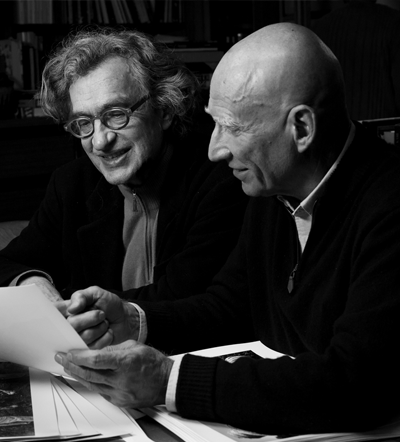
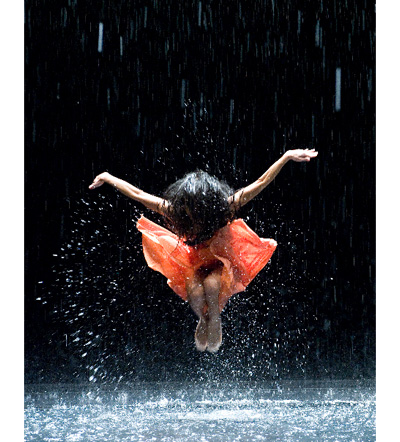
126 Wim Wenderstitle73 Wim WendersThe tip tap of dripping water, the vibrations of sinuous, graceful shapes duelling with the containers of water they will scatter across the stage in the quicksilver, freestyle manner of a troop of nimble Jackson Pollocks – these are the dancers of Pina Bausch’s Tanztheater Wuppertal. Later, the dancers will, in turn, swim breast stroke through the stream emblazoned upstage, to the vital, haunting compositions of Jun Miyake.
 
At the time of her death in December 2009, Bausch was set to be the subject of a documentary directed by her long time friend, filmmaker Wim Wenders. Wenders described to PLANET first encountering Bausch’s work a quarter of a century ago: It was a big day in my life. I was quite unprepared – like many people, I thought dance didn’t concern me. I’d seen some classic dance and was not touched by it, so I didn’t expect much, I tried to resist it, but my girlfriend insisted – so I caved in and was ready for a boring evening, but after about five minutes I found myself on the edge of my seat weeping uncontrollably. I realized this was big, that I’d just discovered something that was really going to change my life. It wasn’t like anything I thought dance could be – it was immediate and contagious and physical and direct – my body understood it before my brain understood it.
 

1 2 3 4 5 6 7

Art October 10, 2011 By Sophie Mollart

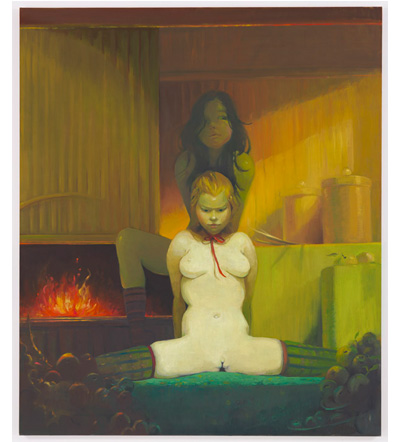
Lisa Yuskavage Fireplace

Lisa Yuskavage Fireplace 2010. All images courtesy of David Zwirner

ly title Lisa Yuskavage

Those visiting David Zwirner’s Chelsea gallery this month will find themselves in the provocative company of a series of lurid, disrobed figures, polished with the curious appearances of feral angels. These cherubic yet licentious effigies feature recurrently in the imagination of Lisa Yuskavage, here in her third solo exhibition with the gallery; feminine forms uncloaked before vivid, polychromatic dreamscapes, depicted in candy-hued, saccharine palettes.
     “I have always worked, even as an undergraduate, with the subject of women, because that’s what made sense to me, it was as if I was an actress and that (the subject) was the protagonist that I was working through. Inevitably, people will ask me – when are you going to paint a man? It would be like asking Meryl Streep – when are you going to go in drag?”
     Emerging onto the New York arts scene in the late 90s, amongst contemporaries such as John Currin and Elizabeth Peyton, Yuskavage’s brand of feminine lasciviousness has consistently proven to mystify and bemuse, provoke vehement feminist discord and analysis through the prism of gender politics – yet, the paintings remain products of distinctly personal realms; intrinsic psychological divulgences,

1 2 3 4 5

Events, film September 21, 2011 By Sophie Mollart

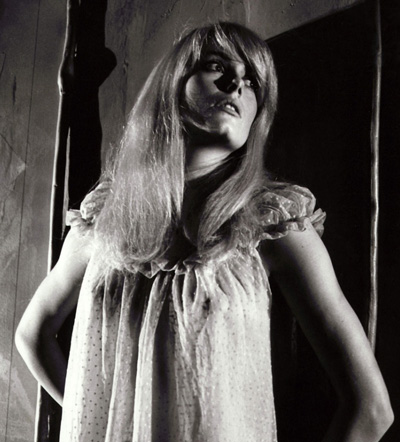
213 Roman Polanski Repulsion rp 11 Roman Polanski Repulsion
Coinciding with the release of his newest film, Carnage – screening this month at the New York Film Festival (an adaptation of Yasmina Reza’s Tony Award winning play) MoMa is holding a retrospective of Roman Polanski’s work to date. Possibly the most contentious of living filmmakers – I will steer clear of the great Polanski debate – instead, consider one of his best – Repulsion (1965).
     Opening with a claustrophobic, close-up of a glassy retina, displaying all the frenzied paranoia that’s come to be Polanski’s most persistent concern – this heavy lashed, rapid blinking eyeball belongs to Catherine Deneuve, playing the perennially glum ingénue Carole, incongruously transplanted from France into the hubbub of 1960s, swinging London.
     Meandering through the film, in a constant state of crestfallen bewilderment – Carole works by day as a manicurist, attending to an assemblage of wealthy, cranky women. Living with her long-suffering sister, she displays all the qualities of the persnickety roommate from hell – and is otherwise consumed by averting the attention of an abundance of male admirers.

1 2 3