
Art May 13, 2013 By Aiya Ono

© Roberta Ridolfi

© Roberta Ridolfi

ridolfi header Roberta Ridolfi
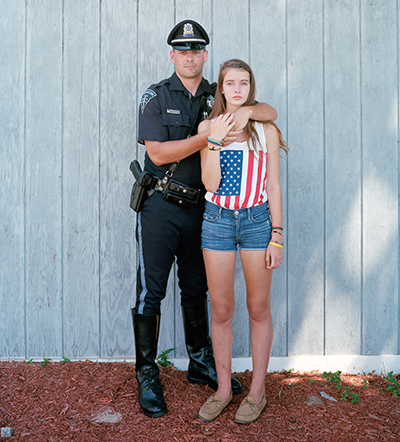
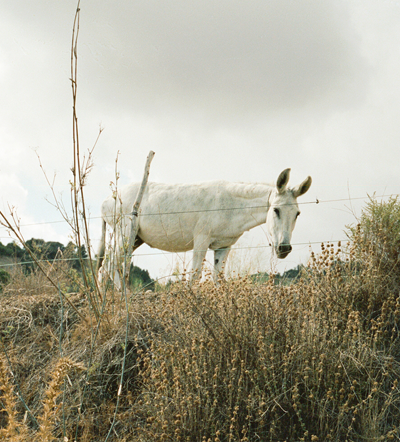
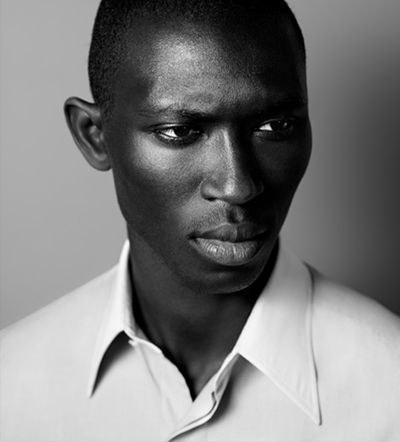
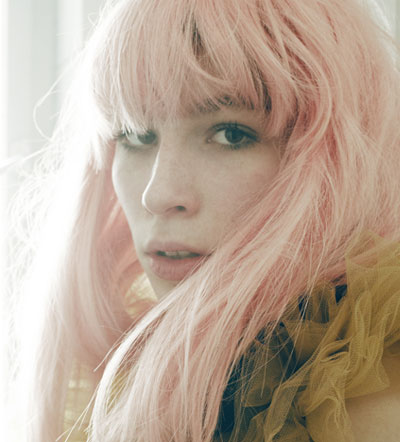
Like memories suddenly resurfacing, Italian photographer Roberta Ridolfi shares rediscovered images from a trip to Andalusia last September. “It’s amazing how editing can change the meaning of an edit,” she says. The edit indeed has a lighter mood compared to the original. Ridolfi finds inspiration from classic cinema, as if foretelling of her chosen title for the original series, Texas Hollywood. As if to emphasize this natural psyche, the way she describes how she became a photographer, is like reading the opening of a story: “My uncle had an old Nikon he bought in the 70’s he hardly ever used. For some reason he thought I could do something with it. Next thing I knew, I quit university and enrolled myself in a photography course. One thing led to another.”

Roberta currently lives and works in London as a fashion photographer.

Slideshow


Art December 3, 2012 By Aiya Ono

© Misha Taylor

© Misha Taylor

gunboysheader GUN BOYS
Most may be familiar with Misha Taylor as a fashion and portrait photographer whose undeniably seductive and grappling work has graced the pages of magazines such as V Man. In a rare instance, today, Taylor shares with PLANET a very special personal project he has been working on.

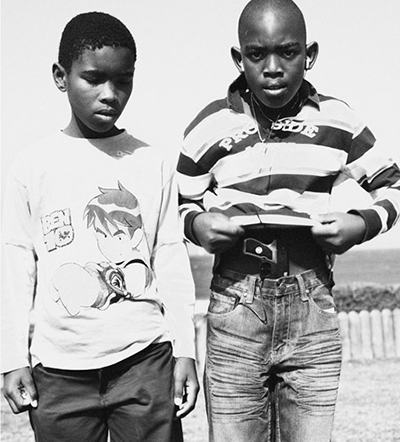
Taken in Durban, South Africa, these images reveal a reality that often goes unrecognized in mainstream media– the effects of Chinese trade agreements on the youth of Africa. Ice cream vendors on the beach fronts of Durban sell 9mm replica pistols that shoot plastic BB guns made in China to young children. Regulations in China forbid the sale of such items within its own country’s borders, subsequently forcing exports to countries like Durban, where a less controlled government sees them sold, not only without regulation, but to those as young as six years old. On the one hand, Misha tells PLANET, “what is happening isn’t all bad”– indeed, Africa needs investment that can boost education and development and China needs Africa’s natural resources. However the emerging economic and political power of China on Africa has been a dual dance of good and bad.

Slideshow

Next

Art October 22, 2012 By Aiya Ono

© Ariko Inaoka

© Ariko Inaoka

header3 Ariko Inaoka
Ariko Inaoka is a photographer from Kyoto, who only shoots film to this day and has her own color dark room. PLANET is pleased to present Ariko Inaoka’s beautiful world full of light and wonder.

Slideshow

Fashion, film September 20, 2012 By Aiya Ono

Shirt by A. Sauvage

Shirt by A. Sauvage

ASAUVAGEHeader A. Sauvage
Few fashion houses have a a mantra like D.E.– Dress Easy, and a film showcased at the Sundance Film Festival.. The orchestrator behind it all: Adrien Sauvage, founder of the House of A. Sauvage. In 2011, Sundance film Festival showcased This is Not A Suit, a sort of existential enquiry about the designer and his collection, reminiscent of Absurdist plays such as those by Samuel Beckett. The film features Sauvage in a room in solitude, as a voice over explains,“the art of D.E.”

The film is also the title of an ongoing project that involves Sauvage dressing those close to his heart–from filmmakers and musicians like Spike Jonze, Terry Gilliam, and Eliot Sumner, to sports veterans like Sauvage himself, who was a professional basketball player during his youth. Changing focus from sports to the art of Savile Row at 20, every representation of Sauvage’s brand is striking. His methodology of creating suits according to activity (for example, what is the perfect suit for grabbing a cup of coffee?), the presentation of his collection, both still and in motion, and the words used to string all elements together–Sauvage is a creator who knows what he’s doing and it comes through in everything he does. Sauvage’s aim is to create a timeless existence, unconfined by seasons and trends. As the voice over states in This is Not A Suit, Sauvage indeed “constructs his own time” and this is what makes his brand so seductive.

Slideshow

1 2 3


Art September 6, 2012 By Aiya Ono

postop118 Heather Huey was Shot by Billy Kiddheathertitle4 Heather Huey was Shot by Billy Kidd
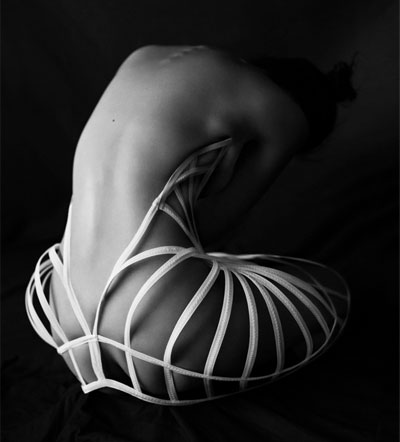
Fashion photographer Billy Kidd’s newest work explores his partner and muse, Heather Huey, a milliner whose pieces have caught the attention of stylists such as Karl Templer and Nicola Formichetti. Huey and Kidd have been working together as artists and lovers with Billy behind the lens and Heather as inspiration for almost two years, using Huey’s body cages and sinuous cocoons to help create poetic images that retain intimacy and anonymity. The result is an erotic ballad that is contemporary yet classic. Their work will be on view from September 6th at Clic Gallery.

Both of your work have an aesthetic that is undeniably grounded in classical aesthetics–Billy your work recalls Lee Miller and Man Ray, Heather you create headpieces, which are historically significant. Yet both of your work is undeniably contemporary. Has this brought you together?
Billy: I feel that’s why Heather and I get along so well. We have such similar tastes that we often respond to the same things.

How did this body of work begin?
Billy: We started shooting almost 2 years ago as a photographer often does with his lover/muse. Heather being the shy one, took some time to open up in front of the camera. Our love and comfort with each other was the catalyst for where it went. It was a goal of mine to, without retouching, to alter her body into different shapes.

Slideshow

Next

Art August 10, 2012 By Aiya Ono

© Magdalena Wosinska

© Magdalena Wosinska

wildatheart header good Wild at Heart
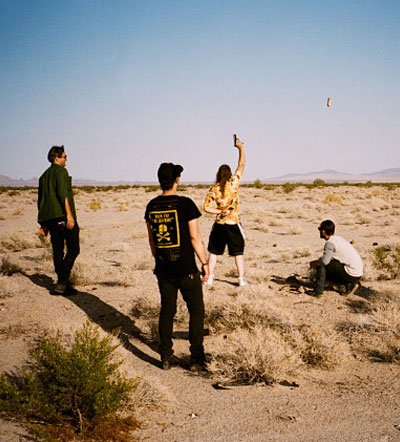
In May PLANET introduced photographer Magdalena Wosinska and her soon-to-be-released book, This Grass is Electric. At the time she had just returned from a road trip with friends that involved shotguns, cliff-jumping in the nude, and exploring natural psychedelic substances as they rode motorcycles from Los Angeles to Laughlin, Nevada for a Harley Davidson convention. PLANET is pleased to present images from this “typical weekend with these kids,” as Wosinska describes it.

Slideshow

Art July 16, 2012 By Aiya Ono

© Candy Kennedy

© Candy Kennedy

gangsterheader Gangst*r
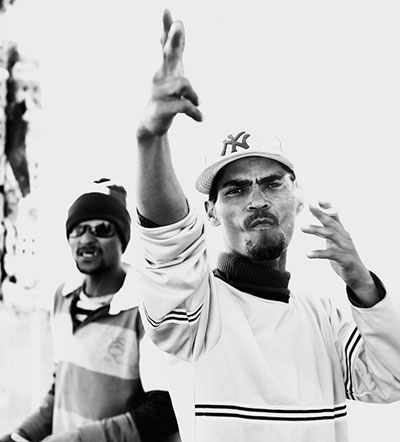
At seven and a half months pregnant, Candy Kennedy and her partner left the sandy desserts of Dubai for the Cape Flats in South Africa. The Cape Flats are notorious as the home of the infamous South African gangs, as a result making it one of the unsafest parts of the world. “Originally the apartheid’s dumping ground” as Kennedy describes, the Cape Flats became home to the “coloured” by force in the 1950’s. Most gang members in the region are mixed in race and range from black, Khoisan, Malay and South Indian ancestry. There are some exceptions however, such as “Whitey”, a caucasian gang member Kennedy met during her journey. These men and women are mostly from dysfunctional families and lack alternatives in terms of career. Becoming a gang member becomes a vital part of their identity, much like the Yakuzas of Japan. The most notorious gangs are referred to as the 26s, 27s, and 28s and are highly organized and controlled from within prison cells. The gangs have their own code of honor and as an ex-gang member described to Kennedy, for the youth it is similar to“joining the army or entering a university”. Most steal and commit crimes to hang around unlicensed, speak easy bars called “Shebeens” and to buy their next fix of “Tik”– the street name for methamphetamine, which provides them with confidence and a sense of being invincible.

Slideshow

1 2 3 4 5


Art June 26, 2012 By Aiya Ono

© Niclas Heikkinen

© Niclas Heikkinen

berlinheader Niclas Heikkinen
A city that has often been referred to as “the old New York,” Berlin is a place where free spirits migrate to claim as their home, where creativity flourishes, and where reinvention rules. Old apartments from DDR Germany are now used as nightclubs, which tell of East Berlin’s transition from communism to democracy. Like so many others, Niclas Heikkinen, a Belgium native, fell in love with Berlin and the people he encountered there. Ann, a charming transgender model; Suzana, a wild and enigmatic character, full of confidence and wonder; and Paul, one of countless earnest young men comfortable in his own skin. Heikkinen tells PLANET, “Each chance encounter was something I wouldn’t have ever imagined. It’s beautiful when such unexpected friendships form and become such an integral part of your life.” PLANET is pleased to present portraits from Heikkinen’s ongoing series on these free spirits and their vibrant souls, which are what make Berlin such an enchanting city.

Forever traveling, Heikkinen envisions a road trip across the U.S. with stopovers at barn dances and rodeos as his next trip. In the meantime he keeps busy working with cutting-edge fashion brands like Neil Barrett, who will release a Heikkinen-helmed short film this year.

Slideshow

Art May 30, 2012 By Aiya Ono

© Magdalena Wosinska

© Magdalena Wosinska

magdalenanewheader1 Magdalena Wosinska
In 1995 Larry Clark released Kids, a startling movie about the reckless lives of skateboarders and their circle of teenagers in New York City. Magdalena Wosinska, then 13, remembers being influenced and disturbed by the film as a skateboarder in Arizona. At the time, her days were spent skating in 118° weather. After meeting Harold Hunter, Anthony Korea, and Todd Jordan, who were a part of Clark’s infamous film, Wosinska picked up a camera to document her friends, and began her life as a photographer and musician. While on tour as the guitarist with Green & Wood, a band she started six years ago with renowned skateboarder Ethan Fowler, Wosinska has created an intimate body of work that has an honest attitude, much like the artist herself.

“I love what I shoot, it’s my real life, it’s my breath. I couldn’t ask for anything more” Wosinska tells PLANET. Perhaps this is what enables her to breathe life into ad campaigns for street-approved brands like Converse sneakers. Although Wosinska’s background is unusual and a bit wild, her personality is infused with professionalism. Still, she insists on using simple point-and-shoot cameras, maintaining spontaneity. “Just give me a camera and let me shoot,” she says.

Slideshow

Next

Art April 11, 2012 By Aiya Ono

Courtesy of Salvage Memory Project

Courtesy of Salvage Memory Project

headerlostandfoundnew Lost and Found
March 11th, 2011 was an unforgettable day for those who witnessed their homes, their schools, and their neighborhoods get swallowed by a massive tsunami. All things familiar disappeared in just a few minutes, leaving people in utter shock. In the town of Yamamoto in Miyagi prefecture, 50% of its surface area was flooded, damaging more than 4,000 buildings. Lying in the mountains of debris were years and years of personal photographs, physical archives of memories that were once taken for granted.

Two months after the quake, research students of the Japan Society for Socio-Information Studies. traveled to Yamamoto and began to collect these photographs and albums. The “Salvage Memory Project” quickly caught the attention of professional archivists and photographers through Twitter and other social media sites, and they offered to help. The task was extremely cumbersome and tedious. The volunteers discovered 750,000 photographs, which were cleaned and put into Google’s image archive service Picasa. With Picasa’s technology, the Salvage Memory Project was able to create a system in which photographs could be searched by either facial recognition or keyword. As a result, out of 750,000 photographs recovered, 19,200 were returned to their owners.

Slideshow

Next