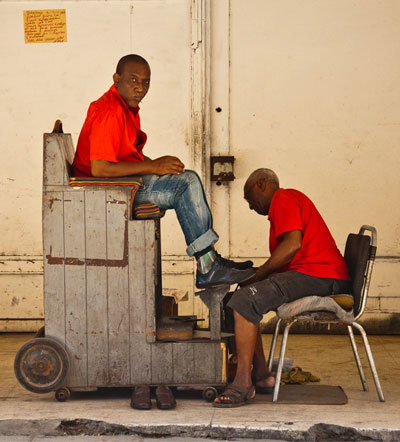
THIRD PLACE © Juliette Charvet

Juliette Charvet placed third in the general category of our 4th annual Global Travel Photo Contest. Juliette is a French photographer based in New York City, specializing in street and travel photography. After graduating from the Paris School of Journalism, she spent over a year in Vietnam and Lebanon, perfecting her photographic skills at the news agency AFP. She now travels extensively with her camera, always trying to capture the world in its most comprehensive authenticity. “To me, travel photography is about seeing our surroundings with wonderment,” she says.
Slideshow
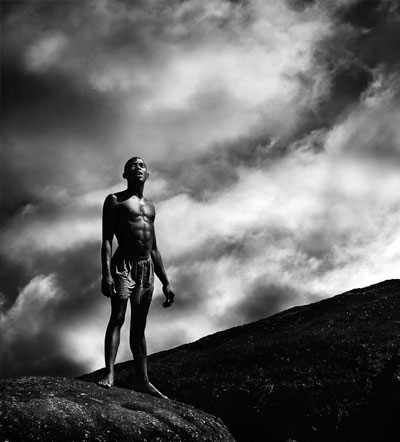
THIRD PLACE © Ian Spanier

Ian Spanier placed third in the portrait category of our 3rd Annual Global Travel Photo Contest. Ian Spanier, a NY based photograper, began taking photographs at six years old when his parents gave him his first point and shoot camera. Ian’s first full book of published work,
Playboy, a Guide to Cigars arrived in cigar shops November 2009 and the public version hit retail stores Spring 2010. The book is a collection of his photographs made in six countries spanning two and a half years. His newest book project,
Local Heroes: America’s Volunteer Fire Fighters, a collection of portraits made across the US is due out Fall 2012. Ian credits much of his inspiration to the original masters of photography as they shot what they saw. For him, there is no “one” subject that he photographs; he also chooses to shoot what he sees.
Slideshow
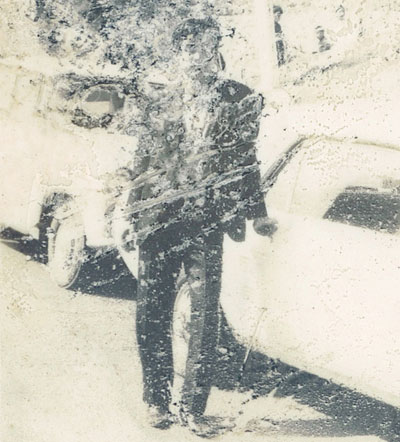
Courtesy of Salvage Memory Project

March 11th, 2011 was an unforgettable day for those who witnessed their homes, their schools, and their neighborhoods get swallowed by a massive tsunami. All things familiar disappeared in just a few minutes, leaving people in utter shock. In the town of Yamamoto in Miyagi prefecture, 50% of its surface area was flooded, damaging more than 4,000 buildings. Lying in the mountains of debris were years and years of personal photographs, physical archives of memories that were once taken for granted.
Two months after the quake, research students of the Japan Society for Socio-Information Studies. traveled to Yamamoto and began to collect these photographs and albums. The “Salvage Memory Project” quickly caught the attention of professional archivists and photographers through Twitter and other social media sites, and they offered to help. The task was extremely cumbersome and tedious. The volunteers discovered 750,000 photographs, which were cleaned and put into Google’s image archive service Picasa. With Picasa’s technology, the Salvage Memory Project was able to create a system in which photographs could be searched by either facial recognition or keyword. As a result, out of 750,000 photographs recovered, 19,200 were returned to their owners.
Slideshow
(more…)
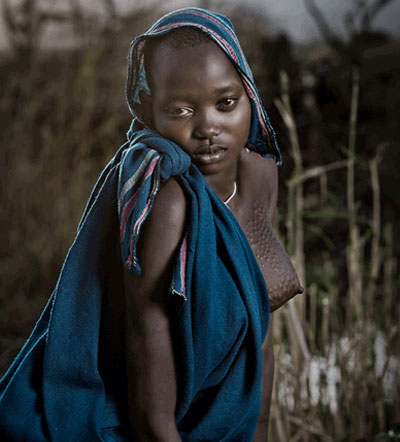
GRAND PRIZE Abyssinian Angel, Ethiopia, William Palank

William J Palank is an environmental portrait photographer based out of San Francisco. His love for international travel and little-known places started after his birth on a US Air Force Base in France, when he was given a free ride in the cargo hold of a military transport airplane at the age of two weeks. Palank is also a fine art printer and a teacher for Leica Akademie North America.
Slideshow
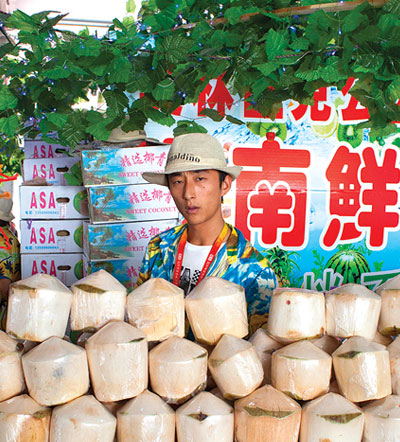
© Anja Hitzenberger

Opening this week is the first solo show of photographer Anja Hitzenberger, an Austrian photographer, filmmaker and video artist who divides her time between New York and Vienna.
The exhibition is the culmination of a two month residency that Anja took in the fall of 2011 in Beijing. Wandering around the site of Beijing’s Olympic Park, she stumbled across a huge tent that housed an immense food court. Inside she found stall after stall of fast food that had been created to appeal to the masses of impending visitors to the area.
Struck by the contrast of the saturated visual displays of food and the seeming apathy and disinterest of the respective employers Anja felt compelled to record it and the project “Take Out” was created.
Hitzenberger is an artist whose work is primarily based on the relationship of the body and its relationship to architecture and space. Her projects have taken her throughout the world, and she often depicts the local populace as part of her work. The “Take Out” project continues this theme, and offers a visual insight into a culture that is full of flux and complexity. Take Out is on view at Underline Gallery, 238 West 14th Street, New York, through May 13.
Slideshow
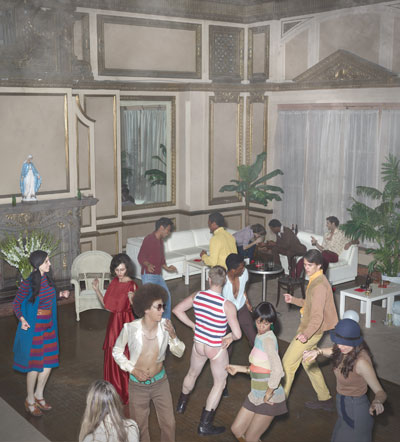
Club Versailles, 1974, 2012. Courtesy the artist and David Zwirner, New York

Playing with notions of time, veracity, and photojournalistic accuracy, Stan Douglas’s latest exhibition
Disco Angola ‘documents’ both the emergence of disco in New York City and the end of the Portuguese colonization of Angola and its subsequent civil war. To create the staged images in the exhibit, Douglas assumed the persona of a NYC-based photojournalist who travels regularly to Angola. He draws on disco’s African influences in order to equate the movement’s rejection of mainstream values with the Angolan fight for liberation. While the images themselves are clearly works of art, what is perhaps more interesting are the larger questions Douglas raises regarding the reliability of photographs to document truthfully and to alter what we remember as history.
Disco Angola will be at David Zwirner from March 9 – April 21. In May, Douglas will be awarded the prestigious Infinity Award by the International Center of Photography.
Slideshow
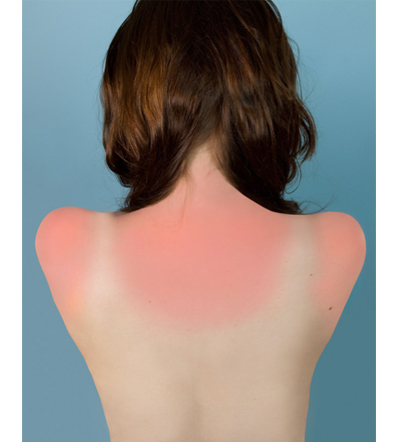
Photograph by Brea Souders

During a
recent conversation with PLANET about his book
Ghost Country, Jordan Sullivan mentioned that his first show as curator will be on view at Clic Gallery in Soho opening March 28th. The show, titled
The Wild & The Innocent, is an exploration of the human body juxtaposed with natural landscapes, composed of imagery from 30 emerging artists and their personal archive. The work seeks to rethink and reframe our relationship with the environment, and explore the duality between the infinite and the finite.
The Wild & The Innocent is also a celebration of our relationship with natural life and its awesome beauty. Although humans can be separated from nature, such a separation causes anxiety in most and drastically reduces the experience of life.
PLANET spoke with Sullivan about the show, which will feature artists Skye Parrot, Collin LaFleche, and Kohey Kanno among others.
Slideshow
(more…)
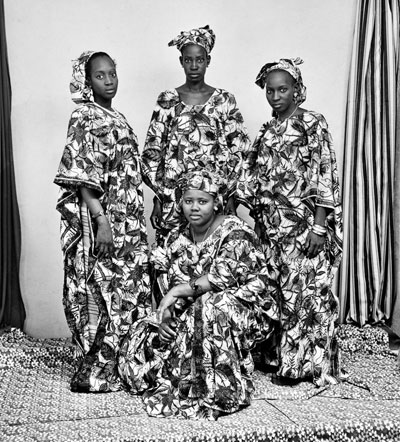
Studio Malick, Bamako, 16 and 17 September 1977 © Malick SidibÈ

When we see photographs from Africa, they’re often dispatches from war or famine zones. It’s a sad truth that there are enough “hot spots” in Africa to supply us with a steady stream of such images for many years to come. But there are happier sides to Africa too, some of which have been documented by native photographers like Malick Sidibé.
Sidibé, who was born in the 1930s, has spent a long career taking portraits of his fellow citizens in Bamako, Mali. Up until recently, few Malian families could afford to buy cameras, so it was customary for people to visit a studio photographer when they wanted to document something significant–from the birth of a baby to a new hairstyle or motorbike. In Sidibé’s portraits you see pride and a sense of occasion, but there’s also a playfulness in the way he gets his subjects to pose, shirt-sleeves rolled up, sunglasses covering their eyes, mimicking styles from the covers of magazines and pop music albums.
Slideshow
(more…)
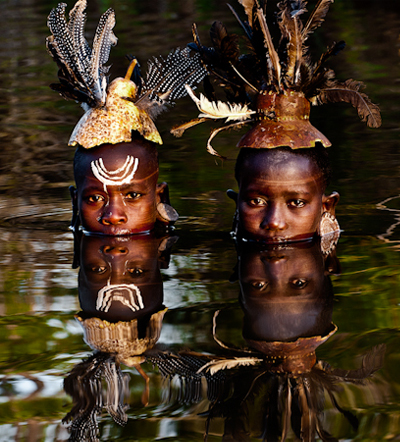
Suri Children by Giordano Cipriani

Giordano Cipriani won Grand Prize in the General Category of our 4th Annual Global Travel Photo Contest. Cipriani is an Italian photographer who began his career as an underwater documentary photographer. His work is influenced by the human body, the element of water, and his travels, which have earned him shows everywhere from Japan to Washington, D.C. Of his winning shot, Cipriani says, “I loved my journey to Ethiopia discovering the Suri tribe. Shots of that beautiful culture came out from my heart before from my lens.”
Slideshow
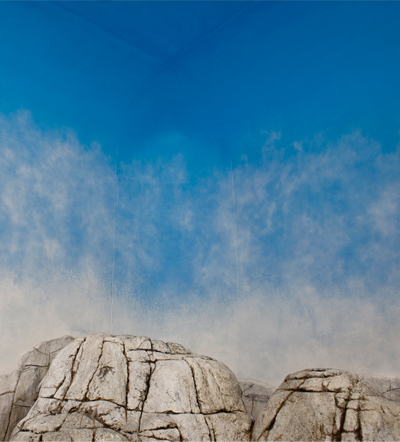
All images by Daniel Kukla

Born with an inquisitive passion for science, Daniel Kukla documented 12 zoos across the U.S. and Europe, capturing a synthetic peculiarity we often take for granted.
Captive Landscapes, unravels the artificial habitats of zoos– spaces which are normally hardly paid attention to. Taking inspiration from his experience working in the natural history department of a museum and his most cherished companion, his pet octopus, Kukla’s work has been shown at the Milk Underground show last autumn and has recently completed a series of work that explores a phenomenon that is a direct result of global warming, known as post-glacial rebound.
What was intriguing to you about artificial landscapes?
I’ve long been fascinated by the educational and research mission of zoos and yet equally frustrated. After visiting countless zoos I began to notice the common of manufacturing theatrical environments for the enclosures and the all too familiar experience of expecting to see the inhabitant, but being confronted by a seemingly empty habitat. I began to photograph these enclosures devoid of the animal or with it on the periphery. Without the distraction of the inhabitant we see the dressed-up concrete and metal surroundings for exactly what they are.
Slideshow
(more…)



 Facebook
 Permalink
 Digg
Digg Reddit
 LinkedIn
 StumbleUpon
 Tumblr


